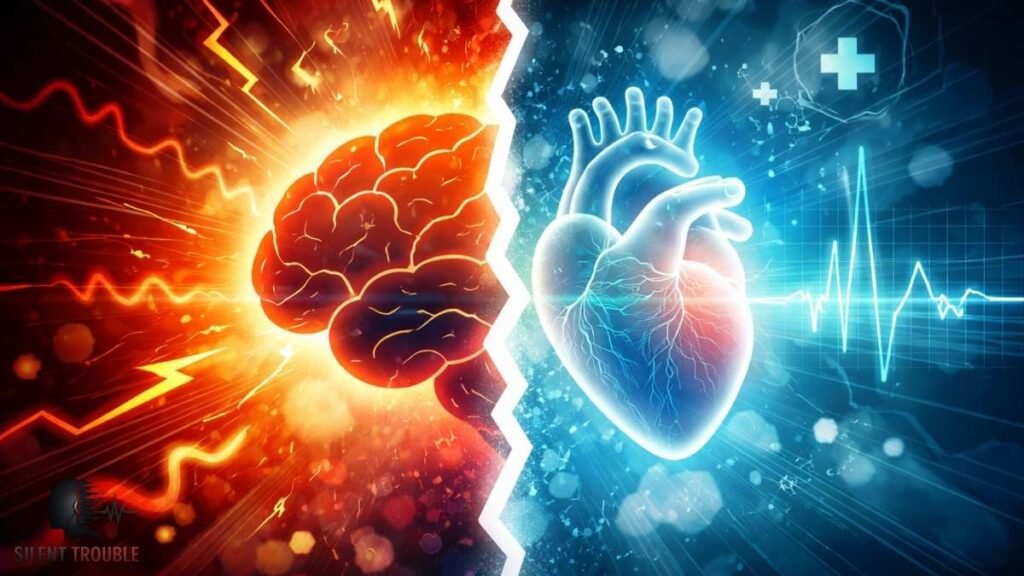

When something feels wrong in the body, the first question isn’t always what it is — it’s why it’s happening. And more often than not, the mind gets stuck between two possibilities: stress or a medical problem.
The discomfort feels real either way. A tight chest. Ongoing fatigue. Digestive issues. Body aches that come and go. None of it feels imagined. But the uncertainty around the cause makes the experience heavier than the symptoms themselves.
Stress and medical problems don’t live in separate lanes. They overlap in how they feel, which is why it’s so hard to tell them apart. Stress can create physical sensations that feel serious. Medical problems can start subtly, without clear warning signs.
This confusion leads people to monitor their body constantly — looking for clues, patterns, reassurance. And in that process, every sensation starts to feel important.
Understanding how stress and medical problems feel different isn’t about diagnosing yourself. It’s about recognizing patterns — so uncertainty doesn’t become another layer of distress.
Why Stress and Medical Problems Often Feel Similar
The reason stress and medical problems get confused is simple: the body doesn’t separate causes when it sends signals. It only reports sensation.
Whether the trigger is physical or psychological, the body uses the same channels — muscles, nerves, digestion, breathing. Tightness feels like tightness. Pain feels like pain. Fatigue feels like fatigue. The body doesn’t label the source.
Stress works through the nervous system, which influences nearly every part of the body. That’s why stress can create very real physical sensations without damaging tissue or causing disease. The sensations are genuine, even if the cause isn’t structural.
Medical problems, on the other hand, also start with physical signals — but for a different reason. Something in the body isn’t functioning as it should. Early on, those signals can feel mild or vague, which makes them easy to confuse with stress responses.
Because both use the same language of sensation, it’s not always obvious what you’re dealing with. The overlap is what creates doubt — not weakness, and not imagination.
How Stress Usually Shows Up in the Body
Stress tends to move. Its effects aren’t always fixed to one place, and they don’t always show up the same way every day. One day it’s tight shoulders, another day it’s a heavy chest, shallow breathing, or a restless stomach.
Stress-related sensations often shift with attention and context. They may feel stronger during quiet moments, late at night, or when you start focusing on them. Discomfort can ease when you’re distracted and return when you’re still. That fluctuation is a key pattern.
Another common trait is inconsistency. Stress symptoms don’t always follow a straight line. They can intensify without clear physical triggers and fade without clear physical solutions. This doesn’t make them less real — it just reflects how closely they’re tied to the nervous system.
Stress usually affects how the body feels rather than how it functions. Strength, structure, and basic capability often remain intact, even when sensations feel intense.
How Medical Problems Usually Feel Different
Medical problems tend to be more consistent. The sensation may start mild, but it usually stays in the same area and follows a clearer pattern. It doesn’t wander as much, and it doesn’t depend heavily on mood or attention.
Symptoms linked to a medical issue often have a physical logic to them. Certain movements make them worse. Certain activities trigger them. Rest, position, or time of day may influence them in predictable ways. There’s a sense of cause and effect.
Another difference is progression. Medical symptoms often change slowly but steadily. They may intensify, spread, or become harder to ignore over time. Even when they fluctuate, there’s usually an underlying consistency that remains.
Unlike stress-related sensations, medical problems affect function more directly. Something feels limited, weakened, or disrupted — not just uncomfortable. The body doesn’t just feel off; it feels impaired in a specific way.
That steadiness is often what separates medical issues from stress responses, even when both feel physical at first.
Why Stress Feels Worse When You Pay Attention
One reason people struggle with stress vs medical problems is how attention changes the experience. Stress-related symptoms tend to amplify when you focus on them.
You notice a sensation, then check it. You think about it, then scan your body again. The nervous system responds to that attention by becoming more alert. Muscles tighten. Breathing shortens. The sensation feels stronger — not because it’s dangerous, but because the system is now involved.
This is where many people ask themselves: is it stress or a medical problem?
The symptom feels real, sometimes intense, yet it fluctuates based on focus, distraction, or emotional state.
With stress, symptoms often grow louder in silence and soften when your attention shifts elsewhere. That pattern is common in stress symptoms vs illness comparisons. Illness-related symptoms usually don’t change much just because you’re paying attention or not.
This doesn’t mean stress symptoms are imagined. It means the nervous system is part of the loop. And when awareness feeds that loop, the body responds — quickly.
Recognizing this pattern helps clarify the difference between stress and illness, without dismissing what you feel.
Why Medical Issues Feel Less Dependent on Mood
Another way people start understanding stress vs medical problems is by noticing how symptoms behave when emotions change.
Medical symptoms usually don’t care about your mood. Whether you’re calm, distracted, anxious, or relaxed, the sensation tends to stay consistent. The discomfort might rise or fall slightly, but it doesn’t disappear just because your attention shifts.
This is one of the clearest contrasts in stress symptoms vs illness. Stress-related sensations often soften when you’re engaged, reassured, or emotionally settled. Medical symptoms usually persist regardless of mental state.
That’s why people dealing with illness often say, “It’s always there.” The body keeps sending the same signal because something physical is driving it. With stress, the nervous system is involved, so emotional context matters more.
When you’re trying to answer is it stress or a medical problem, noticing this pattern can be grounding. If symptoms change noticeably with reassurance, distraction, or mood, stress is often playing a role. If they remain steady and independent, the cause is more likely medical.
This difference doesn’t replace professional evaluation, but it does help clarify the difference between stress and illness in everyday experience.
Common Confusion Points People Experience
This is where stress vs medical problems becomes hardest to separate. Certain symptoms sit right in the overlap, which is why people keep questioning themselves.
-
Chest discomfort — stress can tighten muscles and breathing, while medical issues feel more fixed and persistent
-
Fatigue — stress-related fatigue fluctuates with mental load; illness-related fatigue tends to stay steady
-
Digestive issues — stress often changes digestion day to day, illness usually follows a pattern
-
Headaches — stress headaches move and vary; medical headaches often repeat in the same way
-
Body aches — stress creates diffuse soreness, illness-related pain is more localized
These overlaps are why people constantly ask: is it stress or a medical problem?
Both can feel physical. Both can be uncomfortable. But how they behave over time is usually the clue.
Understanding these patterns helps explain the difference between stress and illness without minimizing either.
Why It’s Hard to Trust Your Judgment
When symptoms don’t come with clear answers, doubt fills the space. You’re told not to worry, but the sensations don’t disappear. At the same time, you don’t want to overreact.
This uncertainty makes stress symptoms vs illness especially confusing. You start monitoring your body closely, second-guessing every sensation. Reassurance helps briefly, then the doubt returns.
The difficulty isn’t lack of awareness — it’s lack of clarity. Without obvious markers, it’s hard to know which signals to trust. And that internal conflict often becomes its own source of stress, adding another layer to the experience.
Listening Without Jumping to Conclusions
The challenge with stress vs medical problems isn’t that one is real and the other isn’t. Both create real physical sensations. The difference lies in how the body is responding — and why.
Stress tends to speak through patterns that shift, react, and soften with reassurance or attention. Medical problems tend to speak through consistency, repetition, and physical limitation that doesn’t depend much on mood or focus. Noticing this distinction helps clarify the difference between stress and illness without dismissing either experience.
When you’re caught between wondering is it stress or a medical problem, the goal isn’t to label yourself. It’s to observe without panic. To recognize whether the body is reacting to internal pressure or signaling something more fixed.
Understanding how stress symptoms vs illness usually feel different doesn’t replace professional care. It simply gives context — so uncertainty doesn’t become another source of distress.
Sometimes, clarity doesn’t come from finding an answer immediately.
It comes from learning how to listen more carefully to what the body is actually doing.
FAQ
How can I tell the difference between stress and a medical problem?
Noticing patterns helps. Stress symptoms often change with attention, mood, or reassurance, while medical symptoms tend to stay consistent and follow a clearer physical pattern.
Can stress really feel like a medical problem?
Yes. Stress symptoms vs illness can overlap because stress affects the nervous system, which controls muscles, breathing, digestion, and pain perception.
Is it stress or a medical problem if symptoms come and go?
Symptoms that fluctuate, move locations, or soften with distraction are more commonly linked to stress. Persistent, location-specific symptoms are more often medical.
Do medical problems feel different from stress in daily life?
Often, yes. Medical issues usually affect function consistently, while stress tends to affect sensation and intensity depending on context.
Why does paying attention make stress symptoms worse?
Attention activates the nervous system. With stress, focus can amplify sensations, which is a common clue when comparing stress vs medical problems.
Why is it so hard to trust my judgment about symptoms?
Because both stress and illness feel physical. Without clear markers, uncertainty grows, making the difference between stress and illness harder to recognize.