
We often think of stress as something that stays in the mind. A few heavy thoughts, a busy week, some pressure that will pass. But when stress doesn’t end — when it becomes part of daily life — the body doesn’t treat it as temporary anymore. It adapts to it.
This is where many people start noticing subtle changes. The body feels tense even at rest. Relaxation feels unfamiliar. Sleep happens, but it doesn’t refresh. And slowly, a question starts forming: can stress really affect the nervous system, or is this just overthinking?
Stress isn’t always loud or dramatic. Sometimes it’s quiet and constant — always being alert, always adjusting, always holding it together. Over time, that pressure stops feeling mental and starts feeling physical. Not as an illness, but as a persistent sense that something inside isn’t settling the way it used to.
And that’s where this conversation needs to begin.
What People Mean When They Say “Stress”
When most people talk about stress, they imagine something intense — panic, anxiety, or a breaking point. But that’s not the kind of stress most bodies struggle with. The harder kind is the quiet one that never fully switches off.
It’s the pressure to keep functioning. To stay available. To stay productive. To hold things together even when there’s no space to release anything. This type of stress doesn’t feel dramatic, which is why it’s often ignored.
Over time, the body stops treating it as temporary. What began as a response becomes a state. This is how stress and the nervous system start interacting without you consciously noticing it. There’s no single moment where something “goes wrong.” It’s a slow adjustment to always being on alert.
And because this kind of stress feels normal, it’s rarely recognized for what it actually is — a constant demand on the system to stay ready, even when there’s no real danger.
So, Can Stress Actually Affect the Nervous System?
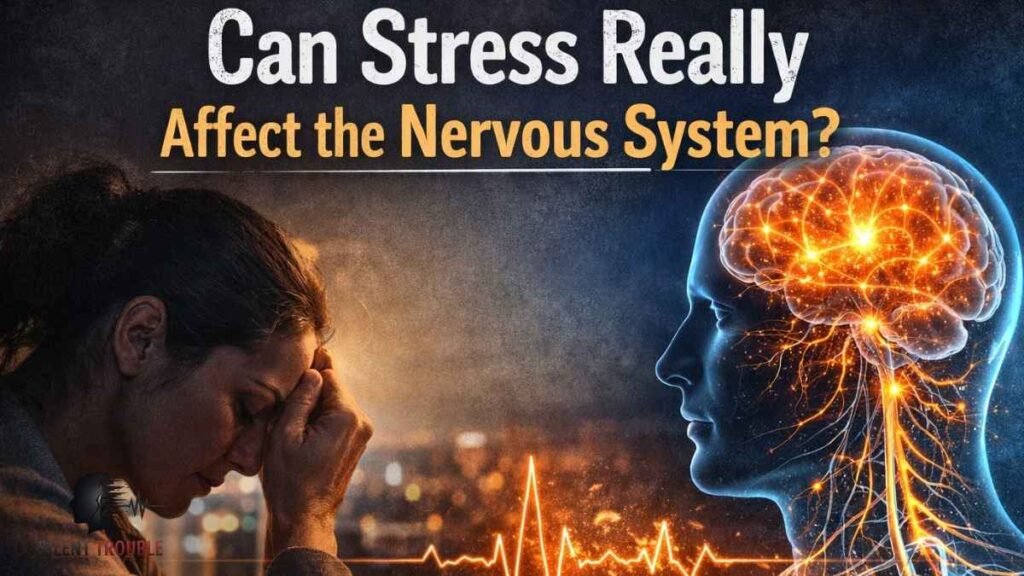
Yes. Stress doesn’t stay limited to thoughts. Over time, it directly affects how the nervous system functions. The nervous system’s role is to detect safety or threat. When stress is constant, it keeps sending the same message: stay alert.
This is how stress and the nervous system become linked. The body remains in a state of readiness, even when there is no immediate danger. Muscles stay tense. Breathing stays shallow. Rest stops feeling restorative.
With chronic stress, the nervous system doesn’t get enough signals to switch off. This doesn’t create a disease, but it changes how the body feels day to day. That’s why people experience nervous system overload without being medically ill.
Stress doesn’t damage the body overnight. It alters the baseline. And once that baseline shifts, everything feels slightly harder than it should.
What Happens When the Nervous System Stays Switched On
When the nervous system stays active for too long, the body stops returning to a relaxed state. Even during rest, it remains partially alert. This is why many people feel tired without clear effort.
A constantly active system affects how the body experiences normal situations. Small tasks feel heavier. Rest doesn’t feel complete. The body feels tense without obvious stress. These are common stress physical symptoms, not signs of illness.
Because this state develops gradually, it often goes unnoticed. There’s no clear trigger, no breakdown — just a slow shift in how the body feels. This is how chronic stress nervous system strain shows up in everyday life.
The body isn’t failing. It’s responding to prolonged pressure by staying ready longer than it should.
Why This Doesn’t Show Up in Medical Tests
Most medical tests are designed to detect disease, not stress-related changes. They look for damage, infection, or structural problems. A stressed nervous system doesn’t always create those markers.
This is why people often hear that everything looks normal, even when they don’t feel normal. Stress and nervous system strain changes how the body functions, not what it looks like on a report. The experience shifts before anything measurable appears.
Because of this gap, many people live with stress symptoms without illness. The body feels unsettled, but there’s no clinical label to explain it. That doesn’t make the symptoms less real — it only makes them harder to confirm through testing.
Signs Your Nervous System Is Overloaded
These signs don’t feel dramatic, which is why they’re easy to miss. But together, they point toward nervous system overload caused by ongoing stress.
-
The body feels tense even when nothing is happening
-
Rest doesn’t feel refreshing
-
Constant low-level fatigue without illness
-
Difficulty fully relaxing or switching off
-
Feeling alert or on edge for no clear reason
-
Sleep happens, but recovery doesn’t
-
A persistent sense that the body feels “off”
These are common stress physical symptoms. They don’t indicate disease, but they do show how chronic stress affects the nervous system over time.
When this state becomes normal, people stop questioning it — until exhaustion makes it impossible to ignore.
Why People Think “It’s All in My Head”
When there’s no diagnosis, no visible problem, and no abnormal test result, doubt fills the gap. You’re told you’re fine. Others seem fine. So the easiest explanation becomes self-blame.
This is why many people start questioning their own experience. The symptoms are physical, but the proof is missing. Over time, stress and nervous system strain gets mislabeled as imagination, weakness, or overthinking.
The problem isn’t that nothing is happening. It’s that what’s happening doesn’t have a clear name. Chronic stress nervous system effects don’t come with obvious markers, so they’re easy to dismiss — especially by the person experiencing them.
When the body reacts quietly, it’s not because the problem is “in the head.”
What This Explains
Stress doesn’t need to feel extreme to have an effect. When it stays constant, it quietly reshapes how the body functions. Over time, the nervous system learns to stay alert longer than necessary — not because something is wrong, but because it hasn’t been given enough signals to fully switch off.
This explains why people can feel physically affected without being medically ill. Chronic stress and the nervous system don’t always produce visible damage, but they do change the baseline of how the body feels. Rest feels incomplete. Tension feels normal. Discomfort becomes familiar.
If stress feels physical, it’s because it is. Not as a disease, but as a state the body adapts to. And understanding that difference is often the first time things start making sense.
FAQs
Can stress really affect the nervous system?
Yes. Long-term stress keeps the nervous system in an alert state. Over time, this changes how the body feels and responds, even without illness.
How does stress affect the nervous system over time?
With ongoing stress, the nervous system stops fully relaxing. This can lead to tension, fatigue, and constant internal alertness.
Can stress cause physical symptoms without illness?
Yes. Stress physical symptoms often appear without disease. The body reacts to pressure even when medical tests are normal.
What is nervous system overload?
Nervous system overload happens when stress keeps the body in a state of readiness for too long, making rest feel incomplete.
Why don’t medical tests show stress-related problems?
Most tests detect disease, not functional changes. Stress affects how the body operates, not what scans or blood work measure.
Why does stress feel physical and not just mental?
Because stress activates the body’s safety systems. Over time, this response becomes physical through tension, fatigue, and discomfort.
Is nervous system fatigue a real thing?
Yes. Nervous system fatigue refers to prolonged activation without recovery, leading to exhaustion without a clear medical cause.
Can chronic stress change how the body feels daily?
Yes. Chronic stress and the nervous system can shift the body’s baseline, making discomfort feel normal over time.